Executive summary
The Chicago Blackhawks are 7-14-2, and captain Connor Bedard is expected to miss roughly three to four months after surgery on his right shoulder. Five years into the rebuild, the organization has built a talented young core, but it has a roster construction problem: too many young, offense-first players, too few who defend, win puck battles and play with physicality, and not enough veteran leadership around them. The analytics show it, with Chicago among the league’s worst in goals against and shot volume. Most of its young players are still under 23 years old. With Bedard out, I recommend treating the rest of 2026-27 as a development year. Chicago should avoid desperation moves, use the season to build the heavy forecheck Jeff Blashill has incorporated and let its young players learn it, sell the veterans who are not part of the long-term plan before the deadline, and protect its core: Bedard, Frondell, Kantserov, Byram, Levshunov, Knight and its own 2027 first-round pick, with Frank Nazar and Sam Rinzel kept unless a star becomes available.
The 2027 offseason is where the roster changes, and Chicago should use its surplus draft picks and prospects to address three needs. The first is top-six help. Because Bedard will have had two shoulder surgeries in five months, at 21, I would push for a two-way center so he can move to the wing permanently; if that center is not available, a power-forward winger who can support Bedard is the alternative. That addition is the move that tells the league Chicago is serious. The second is a stabilizing, defensive-minded veteran on the blue line who protects the front of the net. The third is more veterans who are high-motor and physical and bring the vocal leadership this team is lacking, along with an experienced backup goalie to share the load with Spencer Knight. Those veterans, on short-term deals, would surround the young core while prospects such as Vaclav Nestrasil, Ryan Roobroeck and Xavier Villeneuve develop. By the 2028 offseason, with the salary cap projected to rise to $127.5 million, Chicago will have the room to go after elite talent and complete the move from a rebuilding team to a serious playoff contender.
Introduction
I am a recent finance graduate pursuing a career in hockey operations, and a lifelong Blackhawks fan. This proposal lays out how Chicago can move from a rebuilding team to a playoff-caliber one. It starts with how the Blackhawks got here and where they stand now, with Connor Bedard out after shoulder surgery. From there, it explains why the rest of this season should be a development year and what the analytics say about the roster. It closes with the moves that can make Chicago a playoff team, starting in the 2027 offseason.
How we got here
The rebuild began about five years ago, when Kyle Davidson took over as interim general manager. He traded Alex DeBrincat, Brandon Hagel and Dominik Kubalik, accumulated high draft picks and built a pipeline of young talent. That phase worked. The next phase has stalled, and at its core this is a roster construction problem and a developmental problem.
The 2025-26 season started with promise. The team looked hot out of the gate, and Bedard was the third-leading scorer in the NHL with 37 points in 25 games as of Dec. 2, according to The Hockey News. Since Bedard went down in December 2025, the team has never fully recovered.
In March of 2026, Chicago traded Connor Murphy (March 2), Jason Dickinson and Colton Dach (March 4) and Nick Foligno (March 6) within five days, a group Blashill called “great role models” for the young players, according to SI. The team’s record was 23-28-10 after the Dickinson trade, and it finished 29-39-14, which works out to 6-11-4 over its last 21 games without those veterans. I believe that stretch showed the front office what the young group would look like without veteran leadership around it. And that group was underwhelming. So why did we think things would magically change this season without replacing those veterans?
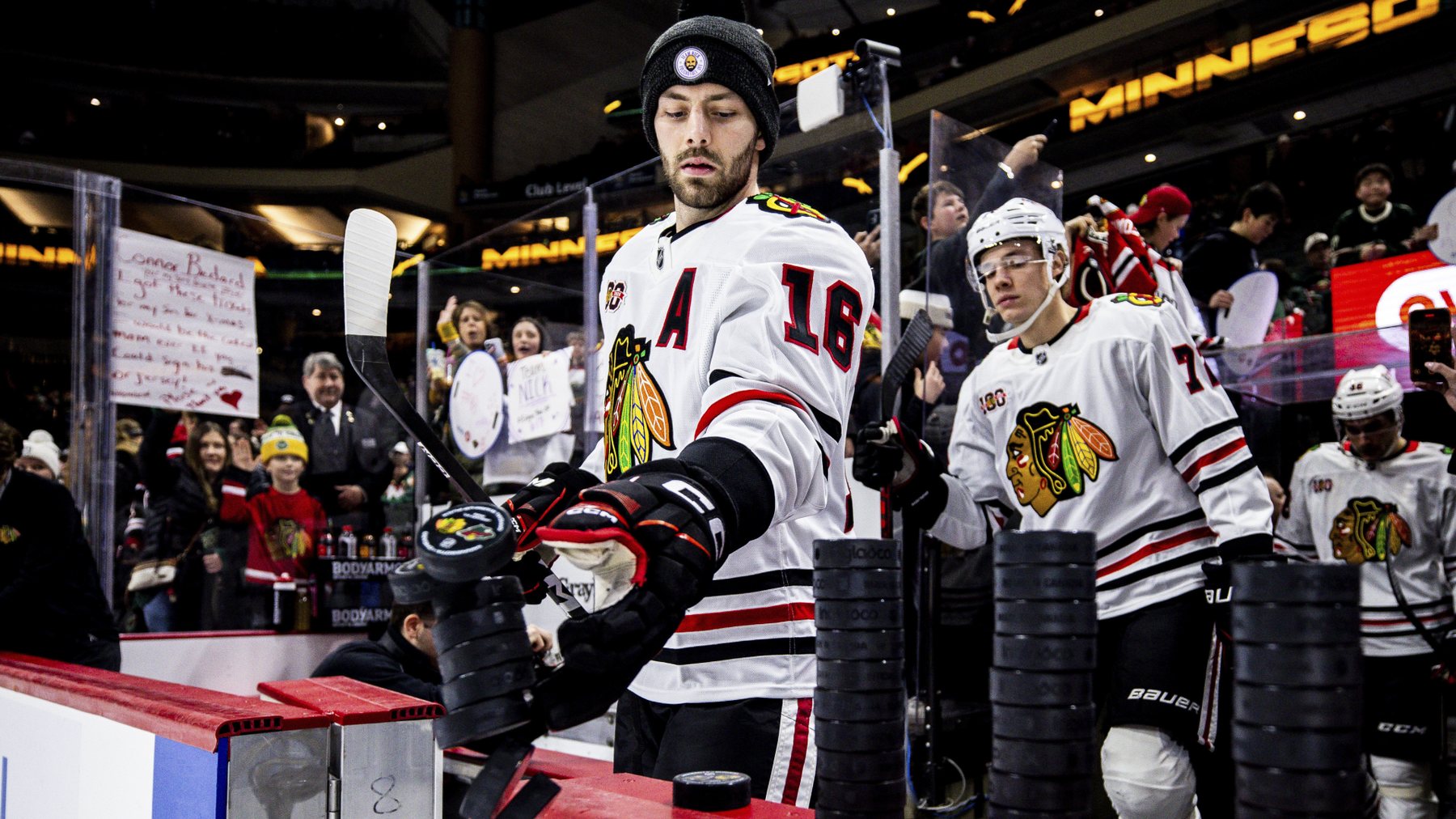
In the offseason, the Blackhawks added Patrick Kane, who could have signed with Buffalo to be closer to home. Hypothetically, without him, Chicago would have entered this season with Anton Frondell and Roman Kantserov as its two big additions, even though Frondell played only 12 games at the end of last season. Kyle Davidson believed these players were ready to take the next step and did not need much veteran help. Connor Bedard, coach Jeff Blashill and the rest of the team came in expecting to become a winning organization and compete for a playoff spot.
I did not believe they were ready, and I was surprised by Davidson’s plan. The only evidence for it was that hot start in 2025-26. The results show how far from the case that was. Chicago is 7-14-2 through 23 games, and these young players have proven that they are talented but not ready.
There are clear positives. Sam Rinzel has looked great. He has 17 points in 22 games, including 12 (one goal and 11 assists) during a five-game point streak that he capped with the overtime winner in Calgary on Nov. 21, according to CBS Sports, and he has taken over the top power-play unit. Roman Kantserov leads all NHL rookies in goals, with nine as of Nov. 17, according to The Hockey News, and his upside should excite Blackhawks fans thinking about the future. Frank Nazar is playing very well too, with a team-high 11 goals and 13 points in 20 games.
Frondell is developing the two-way game Blashill emphasizes, but at 19 years of age he has been deployed against opposing top lines every night, an unusual assignment for a player his age, and he has been consistently outmatched through the start of this season. He also left Saturday’s game in Calgary with a new injury and is questionable for Vancouver, Yahoo Sports reported. With this struggle, I am hoping Jeff Blashill moves him to the wing. Oliver Moore has shown flashes of being the high-motor, speedy center Chicago drafted, but so far his game has looked more uncontrolled than controlled. Nick Lardis and Wyatt Kaiser have not yet played to the level we expected of them at this point. A team cannot be built on development alone, and this group is still learning the league at the NHL level.
From the eye test, Artyom Levshunov seems to have become a better player, and you are no longer holding your breath every time he touches the puck. “He’s not totally there yet, but he’s more comfortable in the systems, he’s more comfortable in his skin,” Jeff Blashill said, per the Sun-Times. However, when you look at his player card below, it tells a different story: a 1% projected WAR and 0% even-strength defense.
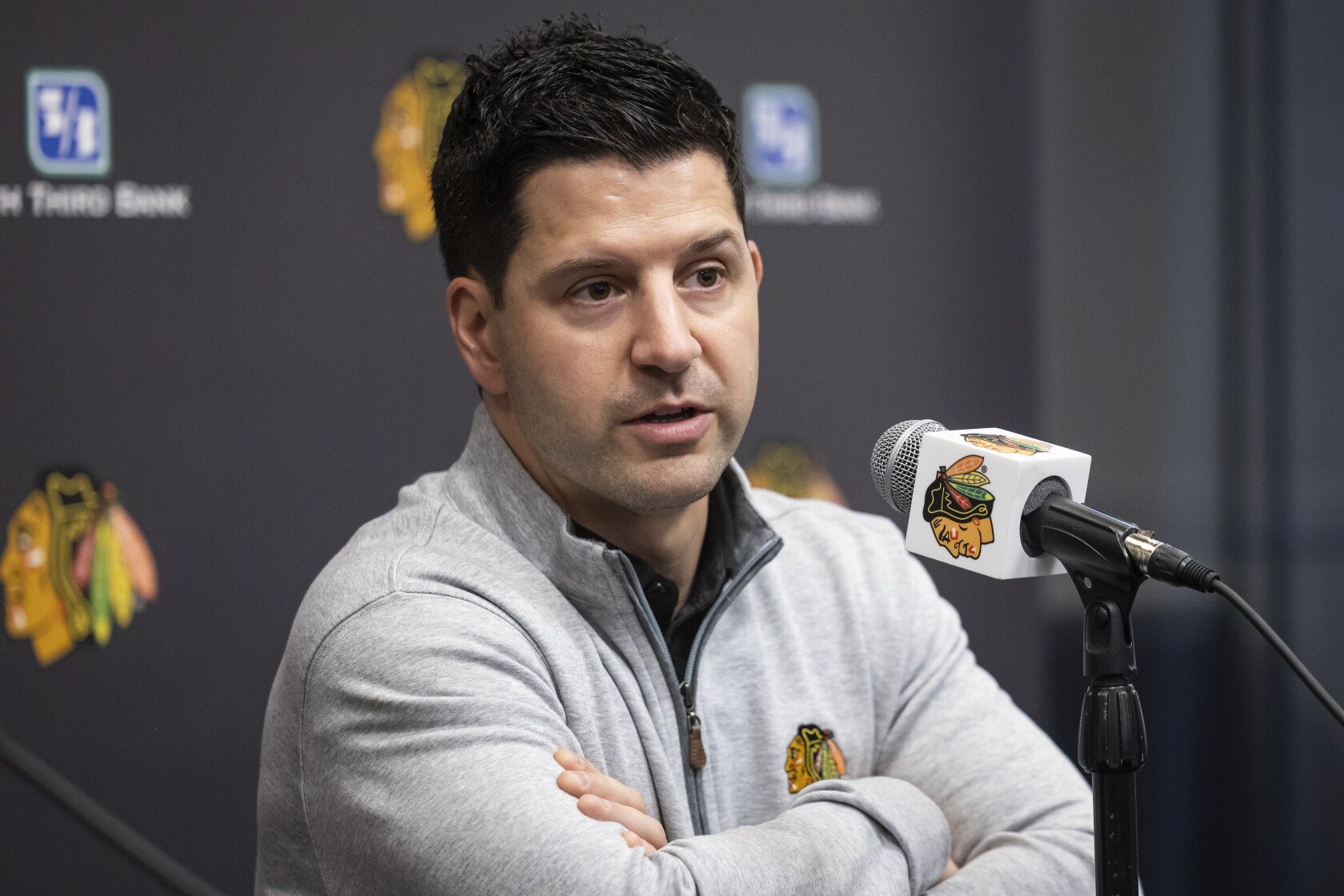
The clearest weakness is defense. Chicago allows 4.00 goals per game, 31st in the NHL, per StatMuse. The goal in reconstructing this roster is to build a team where the young core develops alongside experienced veterans instead of carrying the team alone. That means a two-way center who takes on the defensive load, a stabilizing veteran defenseman and forwards who bring size and physicality, so that the premium young players are protected and put in positions to succeed. Davidson has pointed the same way. In July he said, “adding some offensive talent is essential,” according to Heavy, and NHL reporter Frank Seravalli reported on Chicago Sports Network that the front office is looking for a “shoot-first scoring winger with size,” per the Sun-Times. That is where the plan begins.
Where we are now
Then came another setback. On Nov. 21, the same day as a 4-3 overtime win in Calgary, the team announced that captain Connor Bedard will have surgery on his right shoulder, ESPN reported. He hurt it on a faceoff against Toronto on Nov. 17. It is the same shoulder he injured on a similar play last December, when he chose rehab over surgery, and the operation comes four months after surgery on his left shoulder in July.
Kyle Davidson said the return timeline “will be determined after surgery,” per Blackhawk Up. After the July procedure, Bedard came back in a little over three months, ahead of a four-month estimate, so a similar recovery would keep him out until at least March, CBS Sports noted, citing the Sun-Times’ Ben Pope. That points to an absence of roughly three to four months. Before the injury, Bedard had 7 goals and 11 assists for 18 points in 15 games.
The young core by the numbers
| Player | Pos | Age | GP | G | A | P | Note |
|---|---|---|---|---|---|---|---|
| Connor Bedard | C | 21 | 15 | 7 | 11 | 18 | Out after right-shoulder surgery |
| Sam Rinzel | D | 22 | 22 | 2 | 15 | 17 | Leads Chicago defensemen in points |
| Frank Nazar | C | 22 | 20 | 11 | 2 | 13 | Leads the team in goals |
| Roman Kantserov | RW | 22 | 22 | 9 | 3 | 12 | Rookie; second on the team in goals |
| Anton Frondell | C | 19 | 22 | 4 | 7 | 11 | Youngest player on the roster |
| Artyom Levshunov | D | 21 | 22 | 1 | 2 | 3 | Leads Chicago defensemen in 5-on-5 ice time since Byram’s injury |
Stats are through Nov. 19 (22 games) and do not include Saturday’s win in Calgary, except Rinzel’s, which includes his goal and two assists in Calgary, per CBS Sports. The rest are from StatsCrew and Hockey-Reference, which match. Ages are as of Nov. 21, from Hockey-Reference birth dates. Levshunov’s ice-time note is from the Sun-Times (Oct. 29).
The cards show what kind of players these are. Bedard is a 90th-percentile even-strength offensive player with 96% first assists against 92nd-percentile competition, but his even-strength defense is in the 0th percentile, which is part of why I want him on the wing. Kantserov is a pure finisher: 100th percentile in goals and finishing and a 92% projected WAR, but 4% in even-strength offense and 0% in first assists, so he needs a playmaker beside him. Frondell’s card shows how hard his assignment has been: 97th-percentile competition, but 2% defense and a 7% projected WAR, even with 97% first assists. Levshunov’s card is weighted over his first two seasons, which is why his numbers have not caught up to his progress yet, but his even-strength offense has climbed from about the 14th percentile last season to the 57th this season.
They are still very young
It is easy to forget how young this group is. Frondell is 19. Bedard and Levshunov are 21. Nazar, Rinzel and Kantserov are 22. All six, along with Oliver Moore, are under 23. These are players who should be developing, not players who should be expected to carry an NHL team by themselves. The organization has to give them time to grow into the players they are expected to be.
The pipeline
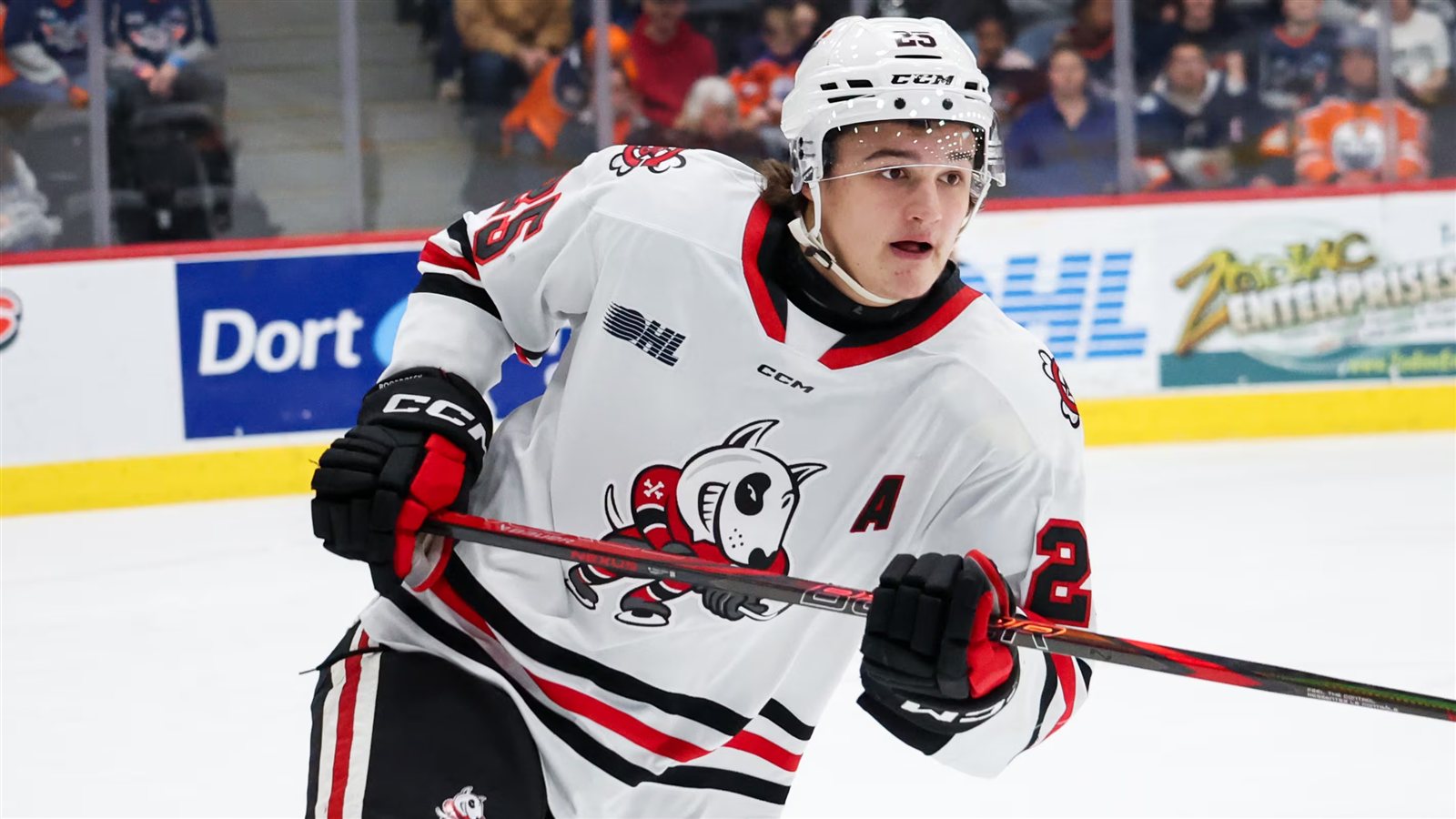
More help is coming. Ryan Roobroeck, a 2026 second-round pick, leads all Blackhawks prospects with 38 points in 21 games for Guelph, and was named the OHL’s Player of the Month for October, according to The Hockey News. Joel Svensson is second, with 32 points in 23 games in Sweden’s HockeyAllsvenskan. These are the prospects to watch this season.
| Prospect | Pos | Age | 2026-27 team | 2026-27 stats | Notes |
|---|---|---|---|---|---|
| Gavin Hayes | W | 22* | Rockford (AHL) | 18 GP, 9 G, 10 A, 19 P | Leads Rockford in points |
| Jiri Felcman | F | 21* | Rockford (AHL) | 18 GP, 3 G, 11 A, 14 P | |
| Nick Lardis | RW | 21* | Rockford (AHL) | 8 GP, 3 G, 4 A, 7 P | Also 0 G, 2 A in 6 NHL games |
| Martin Misiak | F | 21* | Rockford (AHL) | 12 GP, 3 G, 3 A, 6 P | |
| Marek Vanacker | LW | 20* | Rockford (AHL) | 18 GP, 2 G, 3 A, 5 P | 2024 first round (27th); first pro season |
| A.J. Spellacy | F | 20* | Rockford (AHL) | 18 GP, 2 G, 3 A, 5 P | First pro season |
| Sacha Boisvert | C | 20* | Rockford (AHL) | 18 GP, 1 G, 0 A, 1 P | 2024 first round (18th) |
| Drew Commesso | G | 24 | Rockford (AHL) | 7 GP, 2-4, 2.74 GAA, .890 | Knight’s backup in Chicago |
| Joel Svensson | W/C | — | Oskarshamn (HockeyAllsvenskan) | 23 GP, 16 G, 16 A, 32 P | Second among Blackhawks prospects in points; 2024 fifth round (138th) |
| John Mustard | LW | 20 | Providence (NCAA) | 12 GP, 6 G, 7 A, 13 P | |
| Julius Sumpf | C | 21 | Providence (NCAA) | 12 GP, 1 G, 16 A, 17 P | 2025 fourth round (98th) |
| Xavier Villeneuve | LD | 18* | Boston University (NCAA) | 14 GP, 1 G, 13 A, 14 P | 2026 second round (34th) |
| Vaclav Nestrasil | RW | 19 | UMass (NCAA) | 15 GP, 6 G, 3 A, 9 P | 2025 first round (25th); 6-foot-6; top-ranked prospect in the Sun-Times’ summer rankings |
| Mason West | C | 18-19* | Michigan State (NCAA) | 12 GP, 2 G, 0 A, 2 P | 2025 first round (29th); 6-foot-6 |
| Ryan Roobroeck | C/LW | 18* | Guelph (OHL) | 21 GP, 19 G, 19 A, 38 P, +19 | Leads all Blackhawks prospects in points; OHL Player of the Month for October; 2026 second round (35th); 6-foot-4 |
Rockford stats from StatsCrew (as of Nov. 21; Rockford is 7-10). All other prospect stats from Elite Prospects’ Blackhawks “In the System” list as of Nov. 22 (Roobroeck, Svensson, Mustard, Sumpf, Villeneuve, Nestrasil, West); the Rockford figures on that list match StatsCrew. Svensson’s draft slot from Second City Hockey; Sumpf’s draft slot and age from Providence; other draft details from Daily Faceoff and The Hockey News. *Age as listed by Daily Faceoff or the Sun-Times in summer 2026; birth date not yet verified, so the player may be a year older now. Ages without an asterisk are from verified birth dates (Commesso from Hockey-Reference, Mustard from Elite Prospects, Nestrasil from UMass).
The rest of this season is a development year
With Bedard out until at least March, I would not make moves to save this season. Chicago entered Saturday with the NHL’s second-worst record, per ESPN, and trading picks or prospects for a veteran now would spend assets without changing where this season ends. The rest of 2026-27 should go to development. The young players get the top minutes, the power-play time and the hard matchups, with the understanding that they will make mistakes and learn from them. This is the season for them to become their own players, learn the system and develop the right way. Patrick Kane said on Nov. 18 that “more guys will get more opportunity and a chance for a little more ice time,” per Blackhawk Up. That opportunity should go to Nazar, Kantserov, Frondell, Rinzel and Levshunov, and to prospects who earn a look, such as Hayes, Rockford’s leading scorer, and Lardis.
That is also why I would not chase a deal like the one Chicago explored for Rickard Rakell. The Blackhawks talked with Pittsburgh about a trade, but Rakell blocked it: Chicago is one of the eight teams on his no-trade list, TSN’s Pierre LeBrun reported. That move made sense while Bedard was playing and Chicago was in desperation mode, trying to compete for a playoff spot, because Rakell would have made the team better right away. With Bedard out, the playoffs look like a long shot this season, and punting on this year might not be the worst thing in the world. Desperation moves are the last thing Chicago needs right now.
The front office should spend these months building its list for the summer. The big additions wait for the 2027 offseason.
What the analytics say
The underlying numbers point to the same problem the eye test does: Chicago cannot keep the puck out of its own net, and it does not generate enough shots to make up for it. Here is what the data shows, with sources.
Defense is the biggest gap
Over the last 21 games of 2025-26 and the first two of this season, Chicago produced 40.1 expected goals for and allowed 66.9, an expected-goals share of 37.9%, the worst in the NHL over that stretch, the Sun-Times reported using Natural Stat Trick. The team was outscored 66-43 at 5-on-5 in those games. For comparison, the share was 43.8% over the first 61 games of 2025-26, so the drop followed the March trades. This season, Chicago is allowing 4.00 goals per game, 31st in the NHL through Nov. 21, per StatMuse.
The same Sun-Times piece used HockeyStats defensive percentiles to show what left. Jason Dickinson graded in the 97th, 95th and 99th percentiles over the last three seasons, and Connor Murphy in the 85th, 85th and 97th. Only four other Hawks on this season’s roster (Oliver Moore, Teuvo Teräväinen, Jordan Greenway and Alex Vlasic) graded above average defensively last season. That is the problem in one sentence: the defensive responsibility fell on a group that had not shown it could carry it.
Shot volume and the power play
NHL EDGE shows that since 2020-21, Chicago ranks last in the league in both goals per game (2.55) and shots on goal per game (26.6), per NHL.com’s 32-in-32 EDGE preview. Chicago averaged 21.4 shots per game as of Oct. 24, second-lowest in the league, the Sun-Times reported. The same EDGE report has Chicago’s high-danger shooting percentage at 22.7% last season, tied with Buffalo for the best in the league. Chicago finishes the good chances it gets; it simply does not get enough of them. That points to a volume and structure problem, not a talent problem, and it supports adding a shoot-first winger with size.
The power play fits the same pattern. It ranked 29th last season at 16.9% per the EDGE report. It has improved since early November, when it sat 31st at 10.6%, according to The Hockey News, but it is still 27th at 18.5% through Nov. 21, per StatMuse.
The goalie is not the problem
EDGE has Spencer Knight with 432 high-danger saves last season, second in the NHL behind Ilya Sorokin’s 452, a .847 high-danger save percentage (sixth) and a .931 save percentage in 5-on-5 close situations (tied for third). He is facing a very high volume of dangerous chances and stopping them at an elite rate. Improving the defense in front of him is the most direct way to improve the team.
The team card does show Chicago’s goaltending below expected this season (−0.31), so Knight has not been perfect either. But the larger problem is still the volume of chances in front of him.
| Measure | Chicago | Source |
|---|---|---|
| Expected-goals share | 37.9%, worst in the NHL (last 21 games of 2025-26 plus first 2 of 2026-27) | Sun-Times, Oct. 2 (Natural Stat Trick) |
| Expected goals against per 60, 5-on-5 | 2.96 (40% expected-goals share) | HockeyStats, Nov. 22 |
| Goals against per game | 4.00, 31st | StatMuse, through Nov. 21 |
| Shots per game | 21.4, second-lowest | Sun-Times, Oct. 24 |
| Power play | 18.5%, 27th | StatMuse, through Nov. 21 |
| High-danger shooting %, 2025-26 | 22.7%, tied for best | NHL.com EDGE |
| Knight high-danger save %, 2025-26 | .847, sixth | NHL.com EDGE |
How do we get there?
The plan has two parts beyond this season’s development. First, protect the core and Chicago’s own 2027 first-round pick, but be willing to trade the other picks, prospects and NHL players with high trade value for veterans who can help the team win. Second, use the 2027 offseason, through trades and free agency, to add a two-way center, a veteran defenseman, and experience and physicality around the young group, and show the league that Chicago is serious.
The first point matters most. I believe Davidson has become very attached to the players he has drafted, or he has not yet found trades that make sense against what he believes some of these young players will become, and he may be overvaluing their full potential. Waiting only pays off if they reach it, and that is not guaranteed. With the rebuild at a standstill, Chicago has to make logical moves, not desperation moves, that let the Blackhawks compete again starting next season. To move forward, Kyle Davidson has to be willing to move on from some of his drafted prospects and draft capital.
Chicago also cannot keep losing. This is the fifth year of the rebuild, and a young group that keeps losing will get comfortable with it, and losing will become part of its identity. The risk is the 2010s Edmonton Oilers, who missed the playoffs for ten straight seasons after 2006 and selected first overall four times in six years, according to The Hockey Writers. In a December 2014 Grantland piece, Sean McIndoe wrote that it is possible to install a losing culture, and that “an organization has lost so much for so long that it starts to have an effect on everyone who works there.” Even after the Oilers had added a generation of top picks, The Hockey News wrote in March 2019 that “there is something wrong with Edmonton’s culture and it has been wrong for a long time.” Draft capital alone does not end that cycle. Chicago needs results, traction and progress so that it can start playing winning hockey.
The moves
Each step below addresses the same problem. With Bedard out, the order matters: develop the young players now, sell the veterans who are not in the plan at the deadline, and save the major additions for the 2027 offseason.
Roster construction
I do not believe this roster, as built, is a Stanley Cup contender. Even if every young player reaches his full potential, the pieces overlap too much. Davidson has done a strong job building this organization, but there are specific additions that would make this a serious playoff team.
This is a roster construction problem. Talented young players are asked to carry the matchups and the minutes before they are capable of doing so. Chicago has too many of the same type, young, fast and offense-first, and too few who defend, win puck battles and play with physicality. On defense, Rinzel, Byram and Levshunov are offensive defensemen who skate well. Up front, Nazar, Moore, Bedard, Kantserov and Lardis are fast, high-motor goal scorers. That is a strong core, but a roster cannot consist only of that. The Sun-Times has noted that the team lacks size among its top-nine forwards, and NHL reporter Frank Seravalli reported that the front office wants a shoot-first scoring winger with size.
The numbers support that. The power play ranks near the bottom of the league, which suggests that skill alone is not enough without a net-front presence. As of Nov. 3, the team was 4-10-1, and only Vancouver had fewer points. Seravalli said on CHSN’s broadcast of a game against Utah: “They’re going to need to figure out how to create offense and win as they’re currently constituted,” The Rink reported.
Build the system this season
The first move costs nothing: use the rest of this season to build the right system. Blashill has already brought in an aggressive, puck-pressure forecheck, mostly a 2-1-2. “We want to be a puck-pursuit team,” he said, per the Sun-Times. It is the forecheck Carolina and Vegas run. Carolina sends two forecheckers in hard while its defensemen pinch down the walls to force turnovers, according to NHL.com’s Coaches’ Room, and the third forward (F3) trails the play to cover for the pinching defenseman. Vegas does it with a heavy, physical forecheck, as it showed in Game 1 of the Stanley Cup Final. Both run on size, a mobile back end and veterans who finish every check. It is a system that wins championships: Carolina beat Vegas in six games to win the Stanley Cup in June, NHL.com reported.
Before Bedard went down, Chicago needed to change this system, because it was in win-now mode without the size or the defensemen who can pinch and recover. It got pinned in its own end, and Blashill said the team had “allowed the most 2-on-1 rushes in the league by a lot,” per Yahoo Sports. With Bedard out, this season is the time to teach it, let the young players develop their games within it and go into next season a complete team. The question is whether Chicago has the players to run it. The fix is the personnel the system requires: a two-way center, a right-shot veteran defenseman, and size and physicality up front.
What to do with Kevin Korchinski
Chicago also has to decide what to do with Kevin Korchinski. The 22-year-old has played five games this season, with one assist, per Hockey-Reference, and the coaching staff does not appear to trust him. Blashill has said he has “a habit of drifting back when he’s got the puck in the neutral zone,” per The Hockey News. Sitting in the press box does him no good, and Chicago cannot risk putting a former seventh overall pick on waivers and losing him for nothing. His name is already circulating, according to David Pagnotta, as NHL Trade Rumors relayed. He may be a change-of-scenery player, and a sweetener in a deal during the season or in the offseason.
Players + Picks that are off the table
Before any trade, the untouchables. The plan is built around protecting the core:
Byram, who signed a six-year, $75 million contract this offseason, has been limited to six games by an upper-body injury, according to ESPN. Byram and Knight, both 25, are the oldest members of the core. Everyone else in it is 22 or younger. We need these young players to grow into the players they are expected to be, and every move in this proposal is meant to protect that development. Frank Nazar, 22 and signed through 2032-33, and Sam Rinzel are players I would hold onto as well, unless a star player becomes available who catapults this team into contention right away.
Chicago’s own 2027 first-round pick is on the list for a reason. Chicago is likely to be picking in the top five again, which would be a fifth straight top-five pick, according to The Hockey News, and a pick in that range keeps more young talent coming into the pipeline. The class gives Chicago a reason to keep it. Defenseman Landon DuPont is the “runaway favorite” to go first overall, and the top of the class is built around centers, The Hockey News reported in June. Daily Faceoff’s Steven Ellis says there is “a lot of talent down the middle in a way that we haven’t really seen in recent memory,” though he sees no clear number-one center. Not everyone is as high on the class. The Hockey Writers cited The Athletic’s Scott Wheeler describing it as “not great” and not very deep, in an Oct. 10 column. That makes a top-five pick, where the best of the class go, more valuable, not less.
What we have to trade
Chicago has the draft capital to make significant, roster-altering moves. In 2027 it holds three first-round picks and two seconds. Unless Chicago is getting back a proven superstar like Jason Robertson or Nikita Kucherov, its own 2027 first is untouchable, which leaves the Florida and Edmonton firsts as the ones to spend.
| Draft | Round | Picks held | Notes |
|---|---|---|---|
| 2027 | 1st | Chicago, Florida, Edmonton Spend FLA + EDM | Florida’s is marked conditional. Edmonton’s came for Colton Dach and Jason Dickinson and is conditional per its link. The terms aren’t published. |
| 2027 | 2nd | Chicago, Vancouver | |
| 2027 | 3rd | Chicago, Tampa Bay | |
| 2027 | 4th | Vancouver | Re-acquired in the Lukas Reichel trade |
| 2027 | 6th, 7th | Chicago 6th and 7th, Ottawa 6th | Ottawa’s came in the Andre Burakovsky trade |
| 2028 | 1st | Chicago | |
| 2028 | 2nd | Chicago, Edmonton | Edmonton’s came in the Connor Murphy trade and is conditional |
| 2028 | 3rd to 6th | Chicago 3rd, 4th, 5th, 6th; San Jose 4th | |
| 2029 | 1st to 7th | Chicago’s own | No acquired picks |
The organization also has prospects to trade, and I would be willing to move several of them: Sacha Boisvert, Marek Vanacker, Vaclav Nestrasil, Paul Ludwinski, Gavin Hayes, John Mustard, Parker Holmes, Martin Misiak and A.J. Spellacy. The Sun-Times’ summer rankings put Nestrasil first (19, 6-foot-6, 31 points in 34 games at UMass).
There are also several players on the NHL roster whom I would be comfortable moving. I know some are fan favorites, and this may come as a shock, but they still have high trade value and are not part of the core: Nick Lardis, Oliver Moore, Wyatt Kaiser and Alex Vlasic. Vlasic is a proven NHL defenseman, and if Chicago can get better at his spot, it should.
Sell the veterans who are not in the plan
At the same time, Chicago should shop the veterans who are not part of the long-term plan: Tyler Bertuzzi, Teuvo Teräväinen, Jordan Greenway and Ryan Donato. They are not playing at the level we expected, but another team may still pay in draft capital or a B or C prospect before the trade deadline. The offseason is then the time to pursue veterans who will help the young group develop.
Players to avoid
Two names have been linked to Chicago as trade options: Ivan Miroshnichenko of the Capitals and Dmitri Voronkov of the Blue Jackets. I would avoid both.
Washington’s reported price is at least a first-round pick, per Daily Faceoff’s Jeff Marek. That is too much for a 22-year-old who was drafted in the first round in 2022 and is still learning his game and his role. He has been productive in the AHL, and the Sun-Times says he skates well at 6-foot-1, 205 pounds. But he has dressed for only three games this season and has asked for a trade. Chicago already has too many developing players, so paying a first for another unknown does not address the need. A first-round pick should go to a player who has already shown what he is at the NHL level.
He is a large net-front scorer with 21 power-play goals in 211 career games and 40 goals over the last two seasons combined. However, his skating is a concern for a team that plays at this pace. The Sun-Times says his skating and work ethic “don’t get rave reviews,” and The Hockey News described him as a “poor man’s version” of Tyler Bertuzzi. A winger of this type does not solve a roster that needs both pace and size.
The Offseason
The 2027 offseason
With Bedard out, the major moves wait for the offseason. This phase has to put Chicago in position to compete for a playoff spot and a deep run, and the order is simple: trade for a center first, add a stabilizing defenseman, then use free agency for physicality and leadership.
Executing this plan will cost draft capital. Free agency is not what it used to be: teams increasingly trade a player, or his negotiating rights, ahead of July 1 rather than lose him for nothing. The Blackhawks should be prepared to pay in picks and prospects, and they have both. The Florida and Edmonton firsts are the primary assets and should be used aggressively as weapons, supplemented by the 2027 second- and third-round picks and, if necessary, the 2028 second and third.
The center option: Bedard moves to the wing
Davidson is prioritizing Connor Bedard, Anton Frondell and Frank Nazar as centers. My plan is to move Bedard to the wing permanently. He is about to have his second shoulder surgery in five months, at 21, and the right shoulder has now been hurt twice on faceoffs, last December and again on Nov. 17, according to ESPN. (The July surgery on his left shoulder followed an offseason training injury.) On the wing, he stops taking faceoffs and becomes a high-powered goal scorer.
The other half of the plan is trading for a two-way center who takes the load off Bedard: the faceoffs, the defensive-zone coverage, the toughest matchups and the hard-nosed, gritty work it takes to win, so Bedard can use his elite shot and focus on scoring. Early in 2025-26 he had 44 points, including 19 goals, in 31 games, according to The Hockey Writers, a pace of roughly 116 points over 82 games. That is the production I believe he can sustain as a winger next to a two-way center.
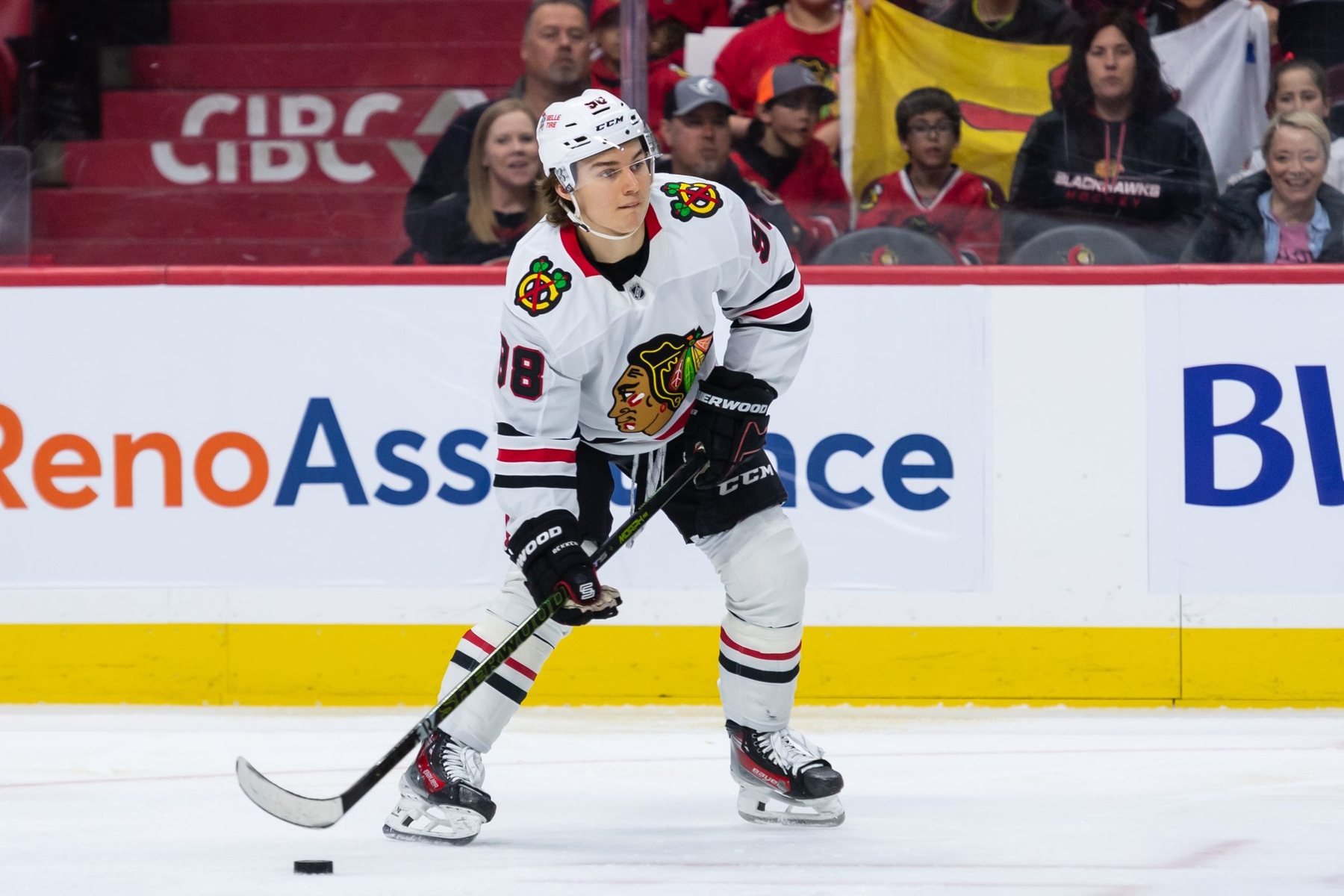
Quinton Byfield is the center I would pursue this offseason. Los Angeles is 7-12 and near the bottom of the Western Conference, and it looks like a team that could be heading toward a rebuild. Byfield is 24, 6-foot-5 and 230 pounds, per Hockey-Reference, and plays a two-way game. His Corsi this season is 62.9% (+15.2 relative) in 18 games, after 53.4% last season, when he had 24 goals and 49 points. He fits Chicago’s timeline, he does not have a no-movement clause, and his contract runs through 2028-29 at $6.25 million a year, according to PuckPedia. His HockeyStats card backs it up: an 84% projected WAR, 87% even-strength offense, 68% defense and 87th-percentile competition as a first-line center.
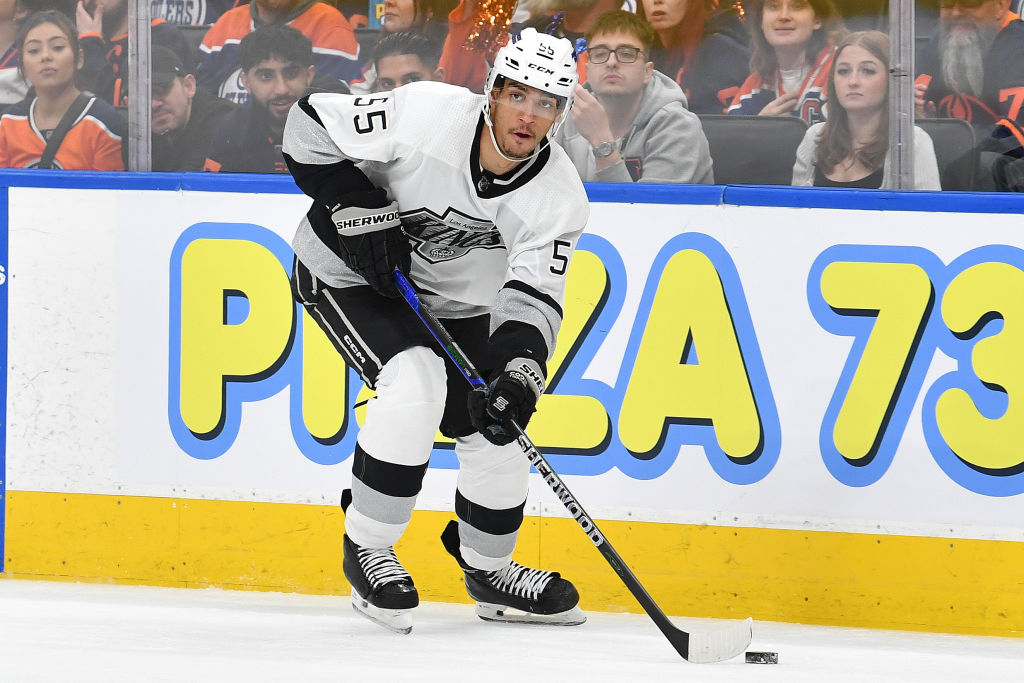
That contract matters. The cap is projected to rise to $113.5 million in 2027-28 and $127.5 million in 2028-29, Daily Faceoff reported, citing Elliotte Friedman. Byfield’s cap hit leaves Chicago room to pursue free agents in the summer of 2027, and the bigger jump in 2028 gives it room to go after elite talent right around the time prospects such as Vaclav Nestrasil, Ryan Roobroeck and Xavier Villeneuve, and even Sacha Boisvert and Marek Vanacker, could be ready, if they are not used as trade pieces first.
Elias Pettersson is the alternative, but he is harder to get. He is signed through 2032 at $11.6 million a year, and his full no-movement clause means he would have to approve any trade, according to Daily Faceoff. His card shows an 87% projected WAR and 95th-percentile competition, but his even-strength offense has fallen to the 41st percentile and his goals to the 30th, at $11.6 million for six more seasons.
The draft capital and the prospects are there to make a Byfield offer. Players and picks who could be moved in a deal like this include:
- Marek Vanacker
- Sacha Boisvert
- Nick Lardis
- Ethan Del Mastro
- Kevin Korchinski
- Florida’s 2027 first
- Edmonton’s 2027 first
- Vancouver’s 2027 second
- Chicago’s 2028 second
- Edmonton’s 2028 second
Some combination of those pieces will most likely be needed, and Oliver Moore could be the blue-chip piece Los Angeles asks for. If Chicago could acquire Byfield without giving up Moore, that would be ideal, because I truly believe in Moore’s upside. So do a lot of other teams.
The move also addresses the team’s clearest offensive problem, the power play. Blashill said in late October that “the power play is mirroring our 5-on-5 game: we can’t score,” per The Hockey News. A team in that position needs its most skilled shooters in the best positions, with centers who protect them. That is why the center comes first.
Frondell needs to move to the wing as well. Opposing top lines have outmatched him at center, and the Sun-Times has argued that a move to the wing would not abandon the plan to develop him as a center and could be reversed quickly.
If Bedard stays at center: Owen Tippett
If Chicago cannot land a two-way center and keeps Bedard at center, a player who makes too much sense for them is Owen Tippett, a power-forward winger who can support Bedard. He is 6-foot-2, plays on a struggling Philadelphia team, and scored 28 goals and 51 points in 81 games last season, per ESPN. He is in the middle of an eight-year contract at $6.2 million a year and has a 10-team no-trade list. The Flyers have received more trade calls on him than on Travis Konecny, and they are looking for a center with top-six upside, Daily Faceoff reported. The two teams have already talked. Daily Faceoff’s Anthony Di Marco reported that the Flyers could be interested in Frank Nazar and Oliver Moore, Philly Hockey Now noted, and David Pagnotta said on DFO Insider that “Philly’s checked in” on Moore and that there has been at least one conversation about him, Broad Street Hockey reported. Chicago could build an offer around its draft capital and Moore. His HockeyStats card shows a 79% projected WAR, 92nd-percentile goal scoring and an 86% penalty rating, with six years left at $6.2 million. If Philadelphia asks for Nazar, I would pass.
Other trade targets
Zach Whitecloud is a defenseman I would look to pursue. He brings stability to the defense corps and veteran leadership. He is 29, has a Stanley Cup ring and carries a $2.75 million cap hit, per Spotrac, and Daily Faceoff reported on Oct. 7 that other teams have interest. His card shows a 70% projected WAR with 83% even-strength defense and a 72% penalty-kill rating, though his WAR has slipped this season, with two years left at $2.8 million. I would not move a first-round pick for him, though. If that is the ask, I would pass and turn to free agency for a veteran defenseman instead.
Even with this season becoming a development year, Chicago should always be looking to add young talent that fits its timeline, and Simon Edvinsson is exactly that. He would be intriguing, and his price may be at its lowest right now. The Red Wings defenseman is an unsigned restricted free agent who must sign by Dec. 1 to be eligible to play this season, according to The Hockey News, so Detroit is running out of time. TSN reported that up to 10 teams have been in talks and that the cost would resemble the deals for Noah Dobson, Mikhail Sergachev and Bowen Byram: multiple assets, including prospects and first-round picks, per TSN. His card shows why he is a long-term piece more than an immediate stabilizer: a 73% even-strength offensive player with a 45% projected WAR, but 22% defense. If Chicago can acquire a player like him for prospects and draft capital alone, I would pursue it. If Detroit asks for a blue-chip player such as Frank Nazar or Anton Frondell, I would pass.
Alexander Nikishin and Jesperi Kotkaniemi intrigue me as well, but the price is the problem. Nikishin signed a one-year, $3 million contract on Oct. 25 after requesting a trade, according to TSN, so he will be a restricted free agent again next summer. Before that deal, he asked for five years at $9 million a year, Elliotte Friedman reported, and Carolina has told teams that a Nikishin deal must include Kotkaniemi, per David Pagnotta. That means taking on Kotkaniemi’s $4.82 million cap hit, with a negative relative Corsi the last two seasons and a steep decline from 43 points in 2022-23 to nine last season, per Hockey-Reference. Their cards confirm it: Nikishin has a 21% projected WAR and 8% even-strength defense despite 97% finishing, and Kotkaniemi has a 25% projected WAR as a fourth-liner, with four years left at $4.8 million.
Young players on rebuilding teams
Chicago should also be calling on young players who fit its timeline and play for bad or rebuilding teams, or for teams that are looking to retool in the near future. Teams that fit the profile, based on The Hockey News’ October Sour Rankings and Bleacher Report’s October trade block, include:
Acquired Shane Wright (22) from Seattle for Matthew Wood on Nov. 1, according to The Hockey News. Wright was on Bleacher Report’s trade block before the deal. If the Predators begin to lose, he becomes a name to monitor.
A retooling club, with Alexis Lafrenière (24) also on the trade block board.
Embracing a rebuild, with Marco Rossi, Zeev Buium and Liam Ohgren.
Building for the future, with Zayne Parekh and Matt Coronato.
May have to restart its rebuild after the Dylan Larkin trade request and the Simon Edvinsson dispute.
Traded Kirill Marchenko and is getting younger.
Only Wright, who has since been traded, and Lafrenière were reported on the trade block. The others are names to ask about, not players reported as available.
Free agency: experience and physicality
Chicago is set to lose Jordan Greenway, Teuvo Teräväinen and Andrew Mangiapane, who are all pending unrestricted free agents, and I do not expect to bring them back. Free agency is where the team becomes more experienced and adds physicality.
This is where the analytics come in. My free-agent list starts with Corsi, which measures the share of shot attempts a team takes while a player is on the ice. A Corsi For percentage (CF%) above 50 means his team is controlling play when he is out there, and CF% rel compares that with his team’s results when he is on the bench. Chicago cannot hold the puck, so I want players who help it do that, or who bring size and physicality that the numbers do not capture.
| Player | Pos | Age | 2026-27 team | CF% (rel), 2025-26 | CF% (rel), 2026-27 | What he brings |
|---|---|---|---|---|---|---|
| Jared McCann | F, L | 30 | Seattle | 56.4 (+13.5) | 56.3 (+18.1), 11 GP | Top-six scoring; 20 goals in 52 games last season |
| Artturi Lehkonen | F, L | 31 | Colorado | 56.7 (+1.1) | 50.1 (−3.7) | Goal scorer; 15 goals in 23 games on 30% shooting |
| Ryan Hartman | RW/C, R | 32 | Minnesota | 53.7 (+5.6) | 50.4 (0.0) | Physicality, leadership; 19 PIM in 24 games |
| Blake Coleman | F, L | 34 | Minnesota | 49.8 (+1.7) | 49.6 (−1.0) | Hard, defensive game; 13 points in 25 games |
| Brandon Carlo | D, R | 29 | St. Louis | 38.5 (−8.0) | 47.0 (−3.3) | 6-foot-5 shutdown defender; 30 hits, 25 blocks in 21 games |
| Brendan Gallagher | RW, R | 34 | Vancouver | Not found | About 45.7 at 5-on-5 | Net-front grit; 3 points in 21 games at $6.5M |
| Josh Anderson | RW, R | 32 | Montreal | Not found | Not found | Size (6-foot-3, 227), speed and physicality |
CF% and CF% rel are all situations, from Hockey-Reference player pages, through about Nov. 21. Gallagher’s figure is calculated from 5-on-5 shot-attempt rates on The Stanley Cap. Anderson’s Corsi was not found in an accessible source. All seven are listed as 2027 unrestricted free agents by Pro Hockey Rumors. Ages are as of Nov. 22; Coleman turns 35 on Nov. 28.
The numbers split the list in two. McCann drives play better than anyone here, and his CF% rel is elite. His 5-on-5 share is closer to even (49.8% this season) but still +10.3 relative to his team. The concern is health. He missed a 17-game stretch, a seven-game stretch and the last three games of 2025-26, according to The Hockey Writers, and an October report listed on The Stanley Cap said he would miss about 10 weeks with a lower-body injury. Lehkonen would be an amazing fit for this group and would give the top line real offensive firepower, but he wants to stay in Colorado: Chris Johnston said he “would love to remain” there, NHL Rumors reported. Colorado may not be able to keep him, though. Cale Makar’s record $20.4 million cap hit starts next season, according to TSN, and Mile High Sticking estimates the Avalanche have about $12.5 million in space for 2027-28. Even if Colorado ends up trading his rights, he will most likely want to play for a contender, and Colorado will most likely want NHL-caliber players back now, not prospects and picks. Carlo, Coleman, Gallagher and Anderson are not play drivers by Corsi. Their value is size, physicality and experience.
The players I would want are three:
- Ryan Hartman or Blake Coleman, for physicality and leadership. Hartman, whom Chicago drafted 30th overall in 2013, per Hockey-Reference, is a right shot who plays wing and center, brings a vocal presence and would be a third- or fourth-liner. Coleman plays a hard, defensive game, has won the Stanley Cup twice with Tampa Bay and, at 35, fits a one-year deal.
- Jared McCann, for top-six offensive upside, with his health checked first.
- Brandon Carlo, as a right-shot veteran defenseman. He is 6-foot-5, physical and good in front of his own net. St. Louis acquired him in June for his size, length, experience and penalty killing, NHL.com reported. His Corsi is weak, so he would be a defensive defenseman, not a puck mover.
The structure is set even before the names are. The young players need to develop year by year, and Chicago should not block that development with long contracts for veterans who are 35 or older. One- and two-year deals at most are the right structure for this group.
A backup goalie would also be a big help. Drew Commesso has had middling numbers in Rockford (2-4, 2.74 goals-against average and .890 save percentage in seven games, per StatsCrew) and has not played for the Blackhawks this season. Spencer Knight has started 18 of Chicago’s 23 games. A veteran backup who could play 25 to 30 games would take a big load off Knight, and Commesso could keep developing in Rockford. Two veterans who fit are pending free agents. Philipp Grubauer, 34, is 6-5-1 with a 3.02 goals-against average and .894 save percentage for Seattle this season, after a .909 in 32 games last season, and is finishing a $5.9 million contract, per Rotowire. Anton Forsberg, 33, has an .894 in limited action for Los Angeles this season after going 16-12-5 with a .909 in 36 games last season, per Rotowire, and is finishing a $2.25 million deal, according to PuckPedia. Any backup has to fit under the cap alongside the additions above, so Forsberg may be the better option. My own estimate is that Forsberg’s next deal lands at one or two years and about $1.5 million to $2.25 million a year, and Grubauer’s at one or two years and about $2 million to $3 million, well below his current cap hit.
Their cards make the choice easier. Forsberg has a 36% projected WAR, with 57% even-strength play and 91% excellent starts, while Grubauer sits at 17%, with 23% even-strength play, 10% quality starts and 1% on low-danger shots.
No single signing fixes this team alone. Together, these players give Chicago what it is lacking: scoring, physicality, vocal leadership and high-motor veterans who can play aggressively alongside its developing young players. Jared McCann or Artturi Lehkonen could step into the top six immediately and bring that scoring. Players such as Blake Coleman, Ryan Hartman, Brandon Carlo, Brendan Gallagher and Josh Anderson bring the vocal leadership and the aggression to win puck battles and do the little things the young players are still learning to do.
Will players want to come to Chicago?
The question at the end of all of this is whether players will want to come to Chicago. It is a tough sell for a bottom-five team in the NHL. That is why Chicago needs one move that solidifies the roster and tells the rest of the league it is serious, and a trade for a center like Byfield or Pettersson is that move. Davidson has already said Chicago is “intent on improving the playing roster,” per Daily Faceoff, and a front office in that position should always be looking to add. The first big move this offseason has to back that up, and once it does, the next free agent’s decision gets easier.
The players behind the plan
Here is how the free agents in this plan compare on their HockeyStats cards.
Jason Robertson is a clear favorite for any team in the NHL to go out and get, and his card is the best in this proposal: a 99% projected WAR, with 96% even-strength offense, power play and goals. The 27-year-old led Dallas with 45 goals and 96 points last season and is playing on a one-year deal, and the Stars want a long-term extension before July, TSN reported. If that does not happen, he is the most likely star to reach unrestricted free agency, or to have his rights dealt to a team of his choosing. Chicago inquired about him in June, Pierre LeBrun reported, per The Hockey News. But as a bottom-five team, Chicago does not look like a destination for a player like that right now.
Jared McCann’s card proves he is a player who could be put in this top six, either alongside Bedard or alongside Frondell on the second line: a 92% projected WAR, 87% even-strength offense and 96% first assists. His even-strength defense (46%) and his health are the questions.
Artturi Lehkonen has the most complete card of the free agents: an 87% projected WAR, 87% even-strength offense, 92% defense, 96% goals and a 91% penalty-kill rating against 95th-percentile competition, though he has also played with elite teammates (99%). He would be perfect for a top-six role alongside Bedard. If Colorado cannot sign him, it will probably sell his rights to a team of his choosing so it can get something for him. That is how the NHL works now: free agency is scarce, and a lot of players are dealt for their rights before July 1.
Ryan Hartman and Blake Coleman both show they would be great leaders, but Coleman has clearly been the better player. If you want pure projected WAR and even-strength defense, Coleman clears Hartman: a 73% projected WAR and 91% defense, against Hartman’s 44% and 13%. This season’s numbers lean Coleman’s way too, with 7 goals, 13 points and 47 hits in 25 games, per Hockey-Reference, against Hartman’s 3 goals, 7 points and 21 hits in 24, per Hockey-Reference. However, Hartman brings more vocal leadership and aggression than Coleman, and that may be the bigger need for this group.
Brandon Carlo brings veteran leadership and size on the right side, and his card fits the role exactly: 83% even-strength defense and an 88% penalty-kill rating, but 18% offense and 5% first assists, with a 52% projected WAR that has climbed this season.
The 2027 draft
Unfortunately, it is also time to talk about the 2027 draft prospects. Chicago entered Nov. 21 with the NHL’s second-worst record, per ESPN, which right now means the second-best odds to win the draft lottery, and with Bedard out, that probably will not change. In recent drafts, the second-worst team has had a 13.5% chance at the first pick, according to NBC Chicago.
As discussed earlier, Landon DuPont is the runaway favorite to go first overall. Both Daily Faceoff and TSN rank the right-shot defenseman first. He had 18 goals and 73 points in 63 games for Everett in the WHL last season and has 15 assists in 12 games at Michigan this season, per Elite Prospects. If Chicago wins the lottery, you pick DuPont and staple a future Quinn Hughes on that right side.
The second pick is more of a toss-up between Sergei Skvortsov, Nazar Privalov, Dima Zhilkin and Jonah Neuenschwander. Daily Faceoff ranked Skvortsov second, Privalov third and Zhilkin fourth in October, with Neuenschwander seventh; TSN had Privalov second, Skvortsov fourth and Neuenschwander ninth in September. If Chicago ends up with the second pick, my first choice is Skvortsov. He is the top-ranked winger on Daily Faceoff’s list, which praises his speed, his shot and his ability to get open against professionals, and I believe his talent and skill set will make him a star in this league. He had 19 goals and 43 points in 52 MHL games last season, and this season he has 10 points in nine MHL games, two points in 11 KHL games with Torpedo Nizhny Novgorod and seven points in three games for Russia’s under-20 team, per Elite Prospects.
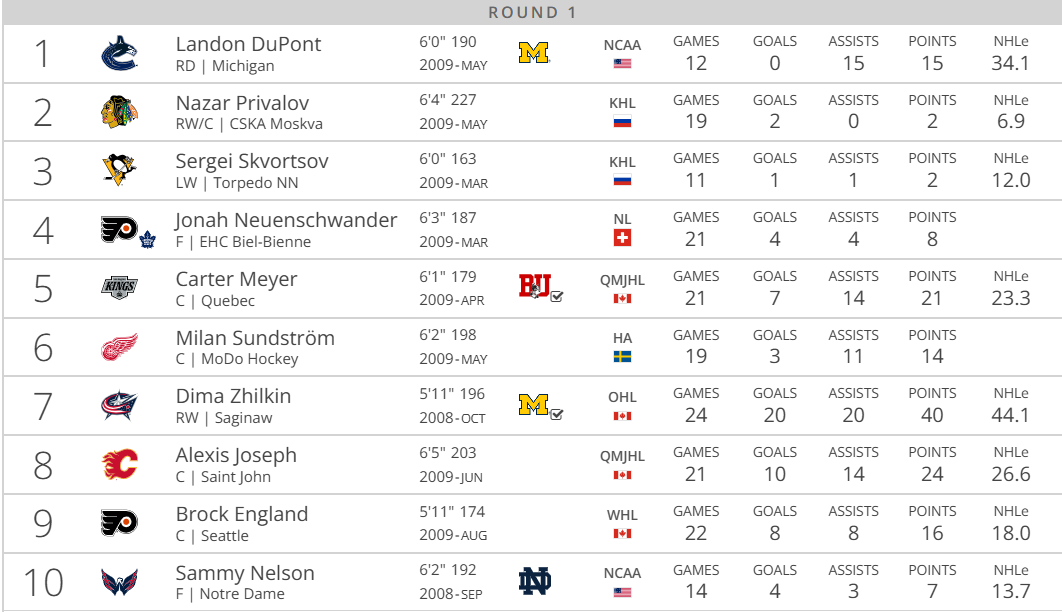
Tankathon’s current mock draft has Chicago picking second and taking Privalov, with Skvortsov going third to Pittsburgh, Neuenschwander fourth and Zhilkin seventh. It also shows the difference in size: Privalov is 6-foot-4 and 227 pounds, Skvortsov 6-foot and 163. I would still take Skvortsov.
If Chicago could add Skvortsov to this group, he would not only replace the kind of player it passed on in Ivan Demidov when it selected Levshunov second overall in 2024, but he would most likely give the Blackhawks the best prospect group in all of hockey.
Conclusion
Chicago does not need to abandon its rebuild. With Bedard out until March and almost no chance at the playoffs, the rest of this season belongs to the young players. Give them bigger roles, let them learn Blashill’s system and sell the veterans who are not in the plan.
The 2027 offseason is where the roster changes. First, trade for a two-way center so Bedard can move to the wing for good. After two shoulder surgeries in five months, he should stop taking faceoffs and focus on scoring. That trade also shows the league Chicago is serious. Next, add a veteran defenseman who protects the net and stabilizes a young, offense-first blue line. Up front, Chicago needs a top-six scorer who drives play and takes pressure off Bedard, along with physical, vocal veterans who win puck battles and hold the young players accountable. All of this happens while protecting the core and the 2027 first-round pick.
By 2028, with more cap space and prospects like Nestrasil, Roobroeck and Villeneuve ready, Chicago can go after elite talent. Develop now, add veterans this summer and start winning next season. That is how Chicago gets back to contending for the Stanley Cup.
Finally, the Blackhawks should schedule Jonathan Toews’ long-overdue jersey retirement ceremony, which should have happened already.
Finance graduate, Concordia University Wisconsin. Pursuing a career in hockey operations, and a lifelong Blackhawks fan.
Independent fan analysis. Not affiliated with, endorsed by or produced by the Chicago Blackhawks or the NHL.
Sources (110)
- HockeyStats.com: player and team cards, viewed Nov. 22
- Tankathon: 2027 NHL mock draft, viewed Nov. 22
- TSN: Kucherov, Hughes, Robertson and DeBrincat headline potential 2027 UFAs (Sept. 17)
- The Hockey News: Blackhawks have expressed interest in Jason Robertson (June 26)
- Yahoo Sports: Rinzel makes history, Frondell injured (Nov. 22)
- Daily Faceoff: 2027 draft rankings, early-season top 40 (Oct. 9)
- TSN: DuPont the definitive No. 1 (Sept. 10)
- NBC Chicago: how the NHL draft lottery works
- Elite Prospects: Michigan 2026-27 stats
- Elite Prospects: Chaika Nizhny Novgorod 2026-27 stats
- Broad Street Hockey: Flyers reportedly targeting Oliver Moore (Nov. 11)
- Philly Hockey Now: Are the Flyers and Blackhawks perfect trade partners? (Nov. 10)
- NHL Trade Rumors: Flyers and Blackhawks talking (Nov. 13)
- StatMuse: NHL goals against per game, 2026-27
- StatMuse: Blackhawks power play, 2026-27
- The Rink: Frank Seravalli is right about the 2026-27 Blackhawks
- TSN: 10 teams in talks for Edvinsson (Oct. 21)
- Rotowire: Philipp Grubauer
- Rotowire: Anton Forsberg
- PuckPedia: Anton Forsberg contract
- The Hockey News: Korchinski’s performance (Oct. 26)
- NHL.com: Hurricanes win the 2026 Stanley Cup Final
- TSN: Nikishin signs a one-year contract (Oct. 25)
- TSN: Penguins-Blackhawks trade foiled by Rakell’s no-trade list (Nov. 18)
- The Hockey News: clarity on the Rakell-Blackhawks rumor (Nov. 18)
- Hockey-Reference: Quinton Byfield
- PuckPedia: Quinton Byfield contract
- Daily Faceoff: cap projections of $113.5M and $127.5M (Sept. 25)
- Spotrac: Zach Whitecloud contract
- Daily Faceoff: Flames conversations on Zary, Whitecloud, Frost (Oct. 7)
- The Hockey News: clock is ticking on Edvinsson (Nov. 10)
- Daily Faceoff: Nikishin’s contract ask (Sept. 28)
- Heavy: Carolina’s Nikishin-Kotkaniemi condition (July 3)
- Hockey-Reference: Jesperi Kotkaniemi
- Hockey-Reference: Ryan Hartman
- Hockey-Reference: Blake Coleman
- Hockey-Reference: Brandon Carlo
- NHL.com: Carlo traded to St. Louis (June 27)
- The Stanley Cap: Brendan Gallagher
- Elite Prospects: Josh Anderson
- Pro Hockey Rumors: 2027 free agents
- Sun-Times: Levshunov and Blashill (Oct. 29)
- The Hockey News: Calder Trophy tracker (Nov. 17)
- Hockey-Reference: Jared McCann
- The Stanley Cap: Jared McCann
- The Hockey Writers: McCann 2025-26 report card (Aug. 21)
- Hockey-Reference: Artturi Lehkonen
- The Stanley Cap: Artturi Lehkonen
- NHL Rumors: Is Lehkonen pricing himself out of Colorado? (Nov. 9)
- Mile High Sticking: Lehkonen wants to stay, but there’s a catch (Nov. 8)
- TSN: Makar’s record $20.4M AAV (Aug. 28)
- ESPN: Bedard elects to have shoulder surgery (Nov. 21)
- CBS Sports: Bedard set for surgery (Nov. 21)
- Blackhawk Up: Bedard surgery and the win in Calgary (Nov. 21)
- Hockey-Reference: 2026-27 Blackhawks roster and stats
- ESPN: Blackhawks team stats
- CBS Sports: Sam Rinzel stats and news (Nov. 22)
- The Hockey News: Rinzel’s game is picking up (Nov. 19)
- StatsCrew: 2026-27 Rockford IceHogs statistics
- The Hockey News: Villeneuve impressing at BU (Nov. 13)
- Elite Prospects: John Mustard
- Elite Prospects: Ryan Roobroeck
- The Hockey News: Blackhawks may have found a gem in Roobroeck (Nov. 14)
- CBS Sports: Vaclav Nestrasil
- UMass: Vaclav Nestrasil roster page
- Daily Faceoff: Blackhawks prospect pool breakdown (July 14)
- The Hockey News: Blackhawks prospect pool overview (July 8)
- Sun-Times: Blackhawks missing Dickinson, Mikheyev and Murphy (Oct. 2)
- NHL.com: Blackhawks NHL EDGE stats, 32-in-32
- Sun-Times: Frondell’s usage and role (Oct. 30)
- SI: Blashill on the departed veterans
- The Hockey News: Blackhawks penalty kill and standings (Nov. 3)
- The Hockey News: the Blackhawks and their power play (Oct. 26)
- Daily Faceoff: Pettersson’s no-movement clause takes effect (July 1, 2025)
- Daily Faceoff: Kings sign Byfield (July 2024)
- The Hockey Writers: the 2026-27 Sharks add physical players
- Daily Faceoff: Predators acquire Bourque and Lyubushkin (July 1)
- NHLPA: Predators sign Bourque to six years (July 2026)
- The Hockey News: Byram trade terms (June 24)
- Daily Faceoff: the Byram trade is underwhelming (June 24)
- Sun-Times: Davidson, Byram and analytics (July 12)
- The Hockey News: Sour Rankings (Oct. 15)
- Bleacher Report: trade block big board (Oct. 1)
- The Hockey News: Central Scouting’s 2027 ranking and the Blackhawks (Oct. 27)
- The Hockey News: 2027 NHL Draft projected top 10 (June 28)
- Daily Faceoff: center depth in the 2027 class (Oct. 10)
- The Hockey Writers: Blackhawks should be worried about a weak 2027 class (Oct. 10)
- Heavy: Davidson wants offensive talent (July 22)
- StatsCrew: 2025-26 Blackhawks statistics
- The Hockey News: Bedard named third star of November (Dec. 2, 2025)
- Yahoo Sports: Blashill on 2-on-1 rushes and the system
- Sun-Times: Blackhawks maintain structure, end skid (Nov. 12)
- Sun-Times: trade rumors on Miroshnichenko, DeBrusk and Tippett (Nov. 1)
- Sun-Times: Blackhawks prospect rankings (Aug. 16)
- NHL.com: Carolina’s forecheck (Coaches’ Room)
- NHL.com: Vegas’s forecheck vs. Carolina, Stanley Cup Final Game 1
- The Hockey Writers: Levshunov is showing drastic improvement (Oct. 22)
- Sun-Times: Blackhawks shots and scoring (Oct. 24)
- StatsCrew: 2026-27 Blackhawks statistics
- Grantland: 10 lessons from the Oilers’ misery (Dec. 2014)
- The Hockey News: the Oilers need a serious culture change (Mar. 2019)
- The Hockey Writers: Oilers end a decade of ineptitude
- Daily Faceoff: Davidson on improving the roster (Nov. 11)
- The Hockey News: price for Miroshnichenko
- The Hockey News: Voronkov trade scenarios
- The Hockey News: Kantserov (Nov. 6)
- The Rink: Seravalli on the 2026-27 Blackhawks
- NHL.com: Blackhawks future draft picks
- Pro Hockey Rumors: 2027 NHL free agents
- TSN: potential 2027 free agents (Sept. 17)